


Kenya has taken a significant step toward overhauling its national weather and climate monitoring infrastructure after the Kenya Meteorological Service Authority signed a Statement of Intent with Meteo France International at State House in Nairobi, marking the formal launch of a long-discussed partnership aimed at strengthening climate forecasting, disaster preparedness and environmental data systems.
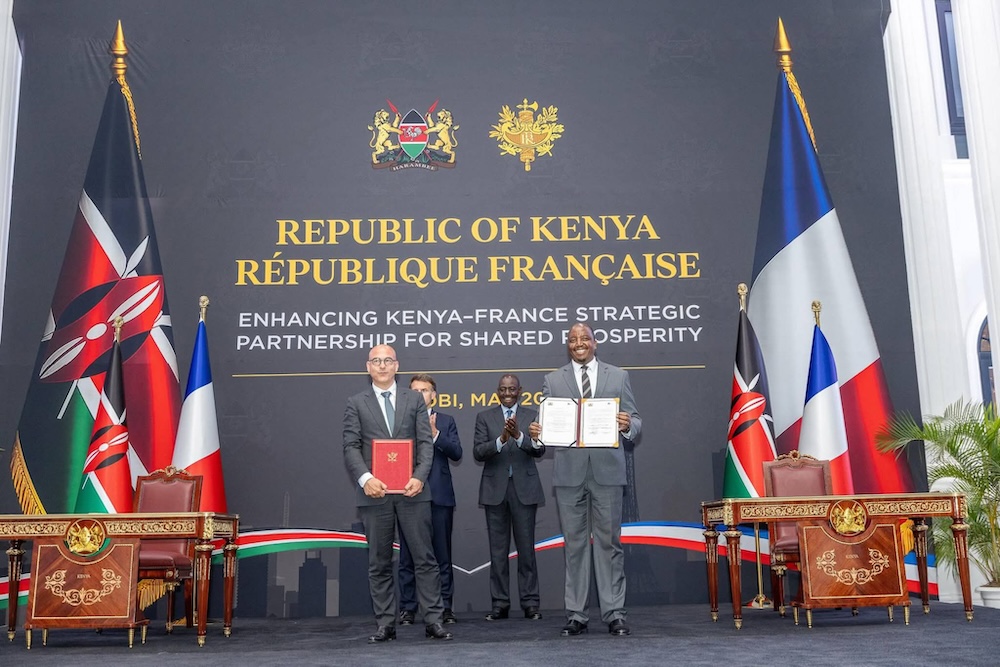
The agreement, witnessed by Kenyan President William Ruto and French President Emmanuel Macron, establishes a framework for technical cooperation and institutional modernisation between Kenya and France in the field of meteorology and climate services. The programme is expected to support the upgrade of Kenya’s observational networks, information management systems, operational forecasting applications and flood risk management capabilities.
The initiative comes as climate variability and extreme weather events increasingly strain Kenya’s infrastructure, agriculture and public services. Successive droughts, destructive flooding and irregular rainfall patterns have exposed gaps in forecasting accuracy and early warning systems, intensifying pressure on governments across East Africa to strengthen climate resilience infrastructure.
Officials involved in the partnership said the modernisation effort is intended to improve the quality, reliability and accessibility of weather and climate information used across key sectors of the economy. Agriculture, which remains heavily dependent on rain-fed production, is expected to be among the primary beneficiaries, alongside disaster response agencies, transport operators, water resource managers and energy planners.
Edward M. Muriuki, Acting Director General of the Kenya Meteorological Service Authority, signed the agreement on behalf of the Kenyan government, while Jean-Sébastien Cases, President of Meteo France International, represented the French side. Kenya’s Environment Cabinet Secretary Debora Barasa and Principal Secretary F. Ngeno were also present during the signing ceremony.
Meteo France International, the global project implementation arm of France’s national meteorological authority, has previously supported weather modernisation initiatives in several countries through technology transfer, forecasting systems deployment and institutional capacity building. Under the Kenyan partnership, the company is expected to assist in upgrading meteorological technologies while strengthening technical expertise within Kenya’s forecasting institutions.
The collaboration reflects a broader trend across Africa, where governments are investing more heavily in climate intelligence systems as weather-related disruptions impose mounting economic costs. According to regional development agencies, inadequate forecasting infrastructure continues to undermine disaster preparedness and agricultural productivity in many African economies, where climate-sensitive sectors contribute substantially to employment and GDP.
In Kenya, floods and droughts have become increasingly frequent and financially damaging. Extreme rainfall events in recent years have destroyed roads, displaced communities and disrupted food supply chains, while prolonged dry spells have reduced hydropower output, weakened livestock production and intensified water shortages. Analysts note that improving forecasting precision and early warning dissemination could help reduce both humanitarian and fiscal losses associated with such events.

The agreement also carries wider strategic significance as climate data becomes increasingly central to economic planning and investment decisions. Governments, insurers, agribusinesses and infrastructure developers are placing greater emphasis on reliable climate information to assess risk exposure and strengthen resilience strategies. For developing economies such as Kenya, modern meteorological systems are increasingly viewed not only as scientific tools, but also as economic infrastructure critical to national planning and long-term development.
The partnership with France may also reinforce Kenya’s regional position as an East African hub for climate services and environmental governance. Nairobi already hosts several international environmental institutions, including the United Nations Environment Programme and the United Nations Human Settlements Programme, while the government has sought to expand its role in global climate diplomacy through initiatives linked to adaptation finance and green growth.
As African countries face rising pressure to adapt to climate-related disruptions while managing constrained public finances, investments in forecasting and early warning infrastructure are increasingly being treated as essential economic safeguards rather than purely technical upgrades. Kenya’s partnership with Meteo France International reflects that shift, positioning weather intelligence as a core component of climate resilience, food security and public-sector planning.


