


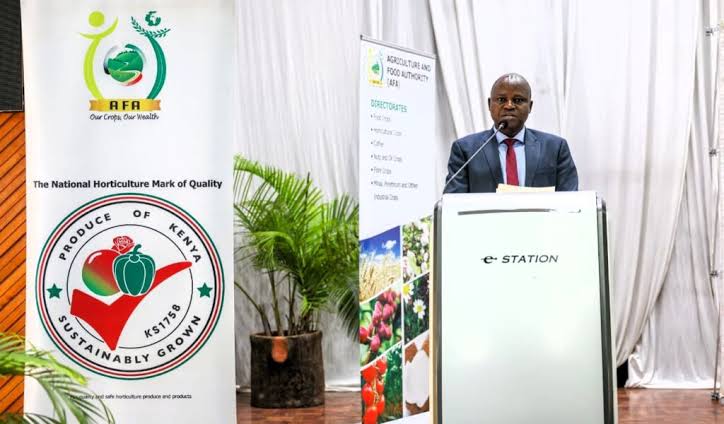
Kenya has launched a national digital traceability platform aimed at strengthening oversight of its horticultural exports, improving compliance with increasingly stringent international food safety regulations and protecting one of the country’s most valuable foreign exchange earning sectors. The National Horticulture Traceability System (NHTS), unveiled by the Agriculture and Food Authority (AFA) on June 23, is expected to enable end-to-end monitoring of fresh produce from farms to export destinations while digitising key regulatory processes.
The new platform comes at a time when global agricultural markets, particularly the European Union, are imposing stricter traceability, phytosanitary and sustainability requirements on imported food products. For Kenya, whose horticulture sector generated approximately KSh202.4 billion (US$1.56 billion) in export earnings in 2024, maintaining market access has become increasingly dependent on the ability to demonstrate full product traceability, regulatory compliance and food safety assurance throughout the value chain.
According to the Agriculture and Food Authority, the National Horticulture Traceability System integrates farm-level production records, licensing, exporter registration and phytosanitary certification into a single digital platform. By moving these regulatory processes online, the government expects to improve transparency, reduce administrative delays and enable exporters to complete approval procedures more efficiently.
“The upgraded system is designed to streamline horticulture produce traceability, export and import processes, licensing and registration, thereby enhancing transparency, efficiency and service delivery across the value chains,”the Agriculture and Food Authority said in announcing the platform.
The introduction of the system reflects a broader shift towards digital governance in Kenya’s agricultural sector as authorities seek to strengthen export competitiveness while responding to evolving international regulatory expectations.Global food markets are placing growing emphasis on supply chain transparency. Consumers, retailers and regulators increasingly require exporters to provide detailed information on where products were grown, how they were handled, what agricultural inputs were applied and whether production complies with environmental, labour and food safety standards.
For Kenyan exporters, particularly those supplying European supermarkets, digital traceability is becoming a commercial necessity rather than a competitive advantage. According to the Kenya Plant Health Inspectorate Service (KEPHIS), the country’s horticulture sector recorded 43 pest-related export interceptions during 2024, comprising 19 involving flowers and 24 involving fruits and vegetables. Such interceptions often lead to shipment delays, additional inspections and, in some cases, outright rejection of consignments at destination markets.
The regulatory challenges extended beyond pest management. KEPHIS also reported 77 export interceptions linked to documentation deficiencies and 80 notifications involving pesticide residue levels exceeding permitted international limits, compared with 50 such notifications recorded the previous year. The increase underscores growing scrutiny by importing countries and highlights the financial risks associated with non-compliance. Rejected shipments can impose significant costs on exporters through lost revenue, increased logistics expenses, reputational damage and reduced buyer confidence. At a national level, repeated non-compliance also risks attracting stricter import controls that could affect an entire country’s export industry.

The National Horticulture Traceability System is expected to strengthen oversight throughout the production cycle by allowing authorities and exporters to identify products at farm level, monitor their movement across the supply chain and verify compliance before consignments leave the country. Beyond improving regulatory compliance, the platform represents part of Kenya’s broader digital transformation agenda across agriculture. Successive government initiatives have sought to modernise agricultural value chains through digital registration systems, electronic certification, market information platforms and technology-enabled extension services aimed at improving productivity and market access.
Horticulture remains one of Kenya’s most strategically important export industries. According to data published by the Kenya National Bureau of Statistics (KNBS), the sector earned nearly KSh202.4 billion in export revenues during 2024, reinforcing its position among the country’s leading foreign exchange earners alongside tea, tourism and remittances. Cut flowers continued to dominate horticultural exports, accounting for approximately 47.5% of total sector earnings, while fruits and vegetables contributed a combined 46%. Kenya remains one of the world’s largest exporters of cut flowers, with European markets representing the primary destination for fresh produce shipments. However, sustaining that position increasingly depends on compliance with evolving international regulations. The European Union has introduced more rigorous sanitary and phytosanitary standards, while broader sustainability policies including enhanced due diligence, environmental reporting and food safety requirements are reshaping agricultural trade globally.
For African exporters, these regulatory changes present both challenges and opportunities. While compliance requires greater investment in monitoring systems, digital infrastructure and quality assurance, stronger traceability can also improve product differentiation, strengthen consumer confidence and support premium pricing in international markets. The Kenyan government intends to expand the National Horticulture Traceability System beyond horticulture into other agricultural value chains, including maize, coconuts and macadamia nuts. Such expansion could improve oversight across a wider range of export commodities while helping producers prepare for increasingly digital and data-driven global trading systems.
Agricultural economists note that traceability systems also offer broader governance benefits beyond export compliance. Digitised production records can strengthen disease surveillance, improve food safety monitoring, facilitate recall procedures when necessary and generate valuable data for agricultural planning and policymaking. For smallholder farmers, who account for a significant share of Kenya’s horticultural production, digital traceability may also enhance access to premium export markets by providing verifiable production histories that meet buyer requirements. However, successful implementation will depend on ensuring that farmers receive adequate technical support, digital literacy training and affordable access to the necessary technologies.

https://www.aecweek-registration.com/2026/
The platform also aligns with Africa’s broader ambitions under the African Continental Free Trade Area (AfCFTA), where harmonised standards, digital trade systems and improved product traceability are expected to play an increasingly important role in facilitating regional agricultural commerce. As international buyers continue to place greater emphasis on transparency, sustainability and food safety, digital traceability is becoming an essential component of agricultural competitiveness. For Kenya, the National Horticulture Traceability System represents not only a technological upgrade but also a strategic investment in safeguarding export revenues, strengthening institutional oversight and preserving access to high-value global markets.
The effectiveness of the initiative will ultimately depend on widespread adoption across the value chain, consistent enforcement of compliance standards and continued investment in digital infrastructure. If successfully implemented, the system could position Kenya as one of Africa’s leading examples of how digital innovation can strengthen agricultural governance while enhancing resilience in an increasingly regulated global trading environment.


