

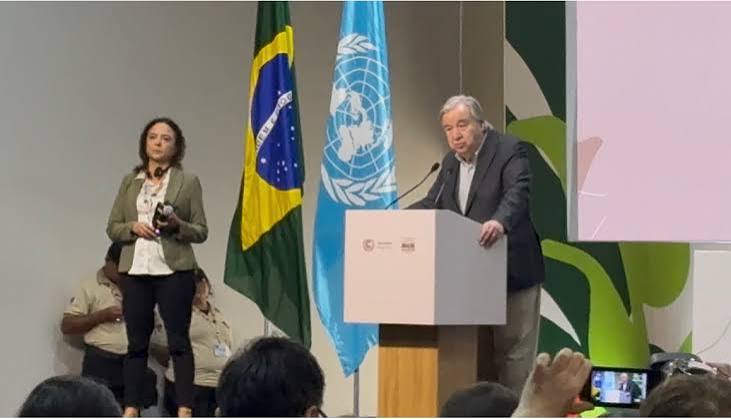
African climate negotiators have rejected calls to reopen the Paris Agreement, insisting that developed countries must honour existing financial obligations to help developing economies address climate change. At the COP31 summit in Antalya, Türkiye, representatives of all 54 African countries called for greater access to grants and highly concessional loans, warning that climate finance structured around conventional borrowing could deepen debt pressures in countries already facing significant adaptation costs.
The position was outlined on November 19, 2026, by Nana Dr. Antwi-Boasiako Amoah, chair of the African Group of Negotiators on Climate Change (AGN). The group opposed any attempt to renegotiate provisions of the 2015 Paris Agreement, particularly those requiring developed countries to provide financial resources to developing nations for emissions reduction and climate adaptation. The negotiations continued beyond the summit’s scheduled November 20 closing date, with climate finance remaining a central point of disagreement.
The dispute reflects a wider divide over the responsibilities of developed and developing countries under the international climate framework. Adopted in 2015, the Paris Agreement seeks to keep global warming well below 2°C above pre-industrial levels while pursuing efforts to limit the increase to 1.5°C. It also recognises differences in national circumstances and capabilities, requiring countries to strengthen their climate plans over time.

Article 9 establishes the obligation for developed countries to provide financial resources to assist developing countries with both mitigation and adaptation. For African governments, the issue is not simply whether climate finance will increase, but whether existing commitments will be delivered on terms that reflect the continent’s exposure to climate risks and limited fiscal capacity.
A draft decision released by the COP31 presidency on November 19 brought the disagreement into focus. An earlier proposal had included a target of at least US$120 billion annually for adaptation finance by 2035. The revised text removed that explicit amount but retained a call to triple adaptation finance by 2035. It also asked the Standing Committee on Finance under the United Nations Framework Convention on Climate Change (UNFCCC) to develop alternative baselines before countries agree on a roadmap.
The omitted figure had been linked to the US$40 billion annual adaptation finance level envisaged under the Glasgow Climate Pact, adopted in 2021. That agreement called on developed countries to double adaptation finance from approximately US$20 billion in 2019 to US$40 billion annually by 2025. Tripling the US$40 billion reference point would produce the proposed US$120 billion annual level by 2035.
Removing the explicit financial baseline creates uncertainty over how the proposed increase will be measured. Without an agreed starting point, governments and other stakeholders may find it more difficult to assess how much additional funding is required, compare contributions and determine whether developed countries are meeting the intended scale of support. The November 19 text remained a draft, with its provisions subject to further negotiations.
For African countries, the terms of climate finance are as important as the headline amounts. The AGN has argued for grants and highly concessional loans rather than financing arrangements that add to government debt. The concern is particularly relevant for adaptation investments, which often protect lives, infrastructure and economic activity without generating direct revenue.
Flood protection systems, coastal barriers, drought preparedness and early-warning infrastructure can reduce the economic and social costs of climate-related disasters. However, unlike power generation projects or commercial infrastructure, these investments rarely produce cash flows that can be used to repay conventional loans. Financing them through commercial borrowing can therefore transfer the cost of climate protection onto public budgets already under pressure from debt servicing and competing development needs.
The scale of reliance on loans in international climate finance adds to these concerns. According to the Organisation for Economic Co-operation and Development (OECD), loans accounted for 67% of public climate finance provided by developed countries in 2024, amounting to US$68.5 billion. The figures cover developing countries globally and should not be interpreted as an Africa-specific breakdown. In a report published on May 21, 2026, the OECD also highlighted the importance of financing terms and conditions for developing economies.
African negotiators have raised concerns about barriers to accessing grant funding as well. Amoah cited a Global Environment Facility (GEF) arrangement that he said required US$7 in co-financing for every US$1 in grants. Such requirements can restrict access for governments with limited fiscal space, particularly where national budgets cannot readily provide the additional resources needed to unlock international funding.
The debate also extends to the future replenishment of the Green Climate Fund (GCF), whose third replenishment cycle will cover 2028 to 2031. On October 29, 2026, the fund’s board approved separate policies governing contributions for the new replenishment period and financing from other sources. The AGN wants traditional developed-country contributors to remain accountable for their established financial obligations, arguing that contributions from alternative sources should not weaken or replace those responsibilities.
At the same time, African governments are seeking to demonstrate that international support can mobilise substantial domestic and additional investment. Amoah cited four projects recently approved by the Green Climate Fund that received approximately US$300 million in grants and mobilised a further US$4.2 billion from the countries involved. He presented the figures as evidence that African governments are prepared to commit significant resources when international climate finance is available.
The figures also highlight the potential role of grants in attracting wider investment. Concessional support can help reduce project risks, improve financing structures and enable governments to commit resources to initiatives that might otherwise struggle to secure funding. However, the ability to mobilise additional capital depends on project design, institutional capacity, the availability of domestic resources and the financial conditions attached to external support.
The negotiations carry implications for Africa’s ability to finance adaptation at a time when climate-related risks are affecting infrastructure, agriculture, water systems and urban settlements. A financing framework that prioritises loans without accounting for the revenue limitations of adaptation projects could constrain investment or increase public debt exposure. Conversely, predictable grant-based and concessional support could help governments plan long-term resilience investments and mobilise domestic capital.
The central issue emerging from COP31 is therefore the relationship between climate commitments, the scale of finance and the terms on which it is provided. For African countries, preserving the Paris Agreement’s existing obligations is closely linked to securing financing that can be accessed and used without undermining fiscal stability. Whether the final COP31 decisions establish a clear adaptation finance baseline and improve access to affordable funding will shape how far international climate commitments translate into practical protection for vulnerable communities and economies.