


Egypt has introduced a temporary export tax on nitrogen fertilizers as governments increasingly move to protect domestic agricultural inputs amid rising global prices and mounting supply chain disruptions linked to tensions in the Middle East.
The measure, which took effect on May 5, imposes a tax of US$90 per ton on exported nitrogen fertilizers for a three-month period, according to a decree published in Egypt’s Official Gazette by the country’s Ministry of Investment and Trade.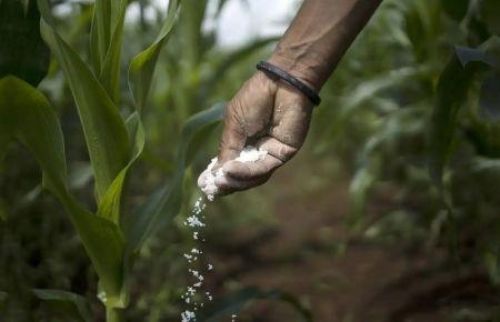
Authorities say the decision is intended to stabilize domestic fertilizer prices and secure local supply at a time when international fertilizer markets are experiencing renewed volatility. The move follows growing concerns that escalating geopolitical tensions and shipping disruptions could tighten global supply and raise food production costs worldwide.
According to the latest Commodity Markets Outlook published by the World Bank, global fertilizer prices could rise by more than 30 per cent in 2026 due to conflict-related disruptions in the Middle East and logistical risks around the Strait of Hormuz, a strategic maritime corridor that handles nearly one-third of global seaborne fertilizer trade.
The institution warned that supply pressures could trigger export restrictions among major fertilizer-producing countries seeking to protect domestic agricultural markets from price shocks.
Egypt’s intervention is therefore being viewed as one of the first significant policy responses to emerging risks in global fertilizer trade.
Nitrogen fertilizers, particularly urea, remain central to global food production systems and are highly sensitive to energy prices and geopolitical instability. According to World Bank estimates, urea prices could average around US$675 per ton this year, representing an increase of nearly 60 per cent compared with 2025 levels.
For African economies, the implications are considerable. Many countries across the continent remain heavily dependent on imported fertilizers to support staple crop production, particularly maize, rice and wheat. Higher fertilizer prices could increase production costs for farmers, place pressure on food prices and intensify inflationary risks in countries already facing currency depreciation and rising import bills.
The issue is especially critical for sub-Saharan Africa, where fertilizer application rates remain among the lowest globally despite growing pressure to improve agricultural productivity and food security. Rising costs could further limit access for smallholder farmers and undermine efforts to expand climate-resilient food systems.
Egypt occupies a strategic position within global fertilizer markets. According to Trade Map data, the country exported approximately 3.54 million tons of nitrogen fertilizers in 2024, making it the world’s seventh-largest exporter behind China, Russia, Oman, the Netherlands, Belgium and the United States.
Despite the new export tax, Egyptian producers may continue exporting significant volumes if elevated global prices preserve profit margins. In that scenario, the measure could also generate additional public revenue for the Egyptian government, particularly as authorities continue managing fiscal pressures linked to inflation, debt servicing and foreign currency shortages.
However, analysts caution that export restrictions by major suppliers risk deepening volatility in already strained agricultural input markets. Any reduction in available export supply from Egypt could contribute to tighter global availability and upward pressure on international fertilizer prices.
The measure also reflects a broader trend toward defensive trade policies among major commodity exporters. In April, Russia announced plans to limit fertilizer exports, including nitrogen-based products, between June and November 2026 in an effort to secure domestic supply.

The resurgence of export controls is reviving concerns seen during previous global commodity shocks, when restrictions on agricultural inputs and food exports amplified market instability and accelerated inflation across import-dependent economies.
For African governments, rising fertilizer prices pose both economic and political risks. Higher agricultural production costs can weaken rural incomes, reduce yields and increase food import dependency, particularly in countries where agriculture remains a major employer and contributor to GDP.
The situation also underscores the growing connection between geopolitics, energy markets and food security. Since nitrogen fertilizers are heavily dependent on natural gas production, disruptions in energy supply chains or transport routes can rapidly transmit price shocks across global agricultural systems.
As fertilizer markets tighten, African policymakers may face renewed pressure to strengthen domestic production capacity, diversify supply chains and accelerate investment in soil health and alternative agricultural productivity strategies to reduce exposure to global commodity volatility.


