


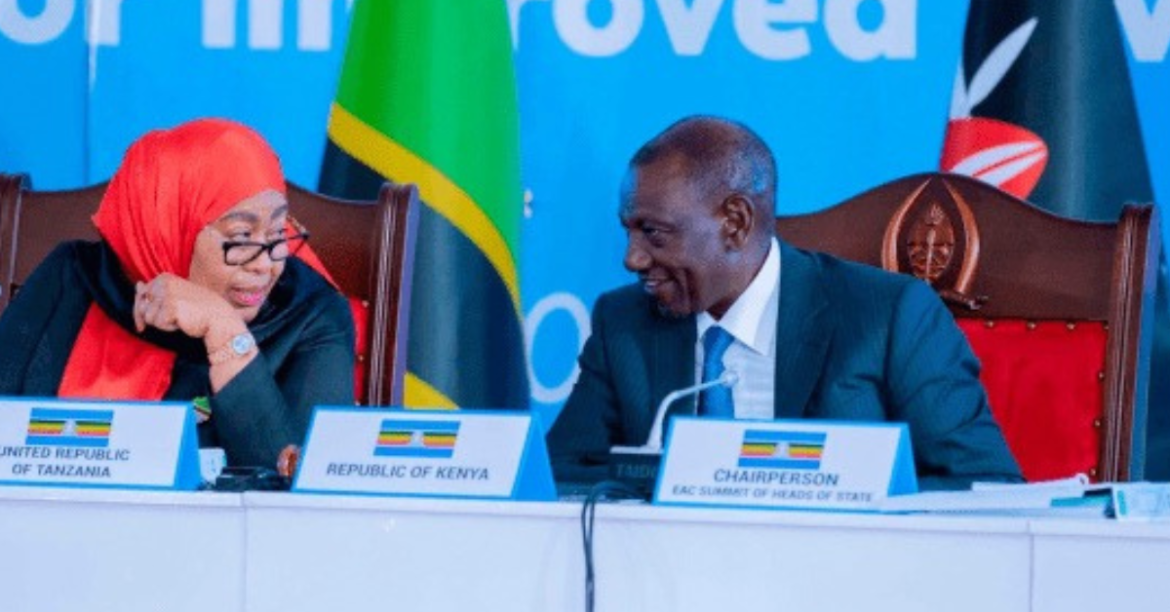
Kenya and Tanzania have agreed to conduct a joint feasibility study for a natural gas pipeline linking Dar es Salaam and Mombasa, while formally launching cross-border electricity trade in a move aimed at strengthening regional energy integration and supporting industrial growth across East Africa.
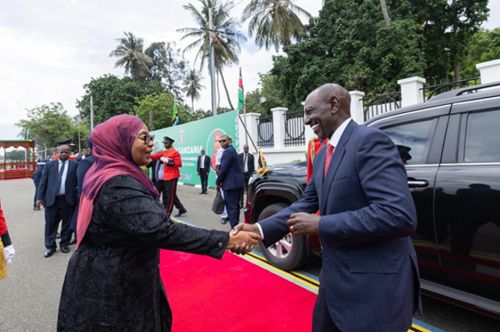
The agreement was signed in Dar es Salaam during a state visit by William Ruto, hosted by Samia Suluhu Hassan. The visit resulted in eight bilateral agreements covering energy, trade, transport infrastructure, agriculture and security cooperation.
Under the agreement, the two governments will assess the technical, financial and environmental viability of a pipeline designed to transport natural gas from Tanzania’s reserves to Kenya’s coastal and industrial markets. Officials said the project is intended to improve energy supply reliability, reduce fuel costs for businesses and support industrial expansion along the East African corridor.
Tanzania holds some of the largest proven natural gas reserves in East Africa, estimated at more than 57 trillion cubic feet, according to government data. Kenya, meanwhile, continues to face rising industrial energy demand as it seeks to expand manufacturing under its industrialisation agenda. The proposed pipeline is therefore being positioned as both an energy security and economic integration project.
The agreement also formalises the start of electricity trading between the two countries, allowing power exchange through interconnected regional grids. Energy officials say the arrangement could help stabilise supply, improve grid reliability and reduce the risk of power shortages by enabling countries to share surplus electricity during peak demand periods.
Regional electricity interconnections have become increasingly important across East Africa as governments attempt to lower energy costs, improve access and support growing industrial and urban economies. Analysts say cross-border power trade can also reduce dependence on expensive emergency generation and improve the efficiency of national power systems.
The pipeline project will proceed in phases, with the feasibility study expected to determine whether the investment is commercially and environmentally viable. Electricity trade, however, is likely to advance more quickly given existing regional interconnection frameworks under the East African Community and broader continental energy integration efforts.
The agreements come as Kenya and Tanzania attempt to strengthen economic ties that both governments say remain below potential. Bilateral trade reached approximately US$860 million in 2025, according to officials, although both countries argue trade volumes could be significantly higher without persistent non-tariff barriers affecting the movement of goods and services.
Ruto said
administrative and regulatory bottlenecks had constrained cross-border trade and investment flows, limiting the region’s broader economic potential.
The two governments pledged to eliminate outstanding barriers by the end of May 2026 and established monitoring mechanisms through joint trade cooperation structures.
According to Kenyan officials, removing those restrictions could unlock up to US$500 million in additional cross-border investment over the next three years, particularly in manufacturing, logistics, transport and energy-intensive industries.
The agreements extend beyond energy cooperation into transport and trade infrastructure. Discussions included rail and maritime transport projects, electricity interconnections, road corridor development and a proposed railway linking northern Tanzania to Kenya.
These projects are expected to play a wider role in improving regional supply chains and facilitating trade within the East African Community, where Kenya and Tanzania account for roughly 40 per cent of intra-regional trade. Both countries also serve as strategic transit corridors for several landlocked economies, including Uganda, Rwanda, Burundi and parts of the Democratic Republic of Congo.
Infrastructure gaps, customs delays and regulatory inconsistencies have long been identified as key constraints to deeper regional integration. Policymakers increasingly view coordinated infrastructure development and regulatory harmonisation as necessary to improve competitiveness and reduce the cost of doing business across East Africa.
The proposed gas pipeline also reflects a broader African trend toward using natural gas as a transition fuel to support industrialisation and energy access while renewable energy systems continue to expand. Several African governments argue that gas infrastructure remains necessary for stabilising electricity supply, supporting manufacturing and reducing dependence on imported fuels during the energy transition.

However, the long-term viability of large-scale gas infrastructure projects may depend on financing conditions, regulatory alignment and evolving global climate finance priorities, which are increasingly shifting toward lower-carbon energy investments.
For Kenya and Tanzania, the success of the agreements will likely depend on implementation capacity, regulatory coordination and the pace at which trade barriers are removed. If the pipeline project proceeds, it could strengthen East Africa’s regional energy market and reinforce efforts to position infrastructure and energy integration as drivers of industrial growth and trade expansion.


