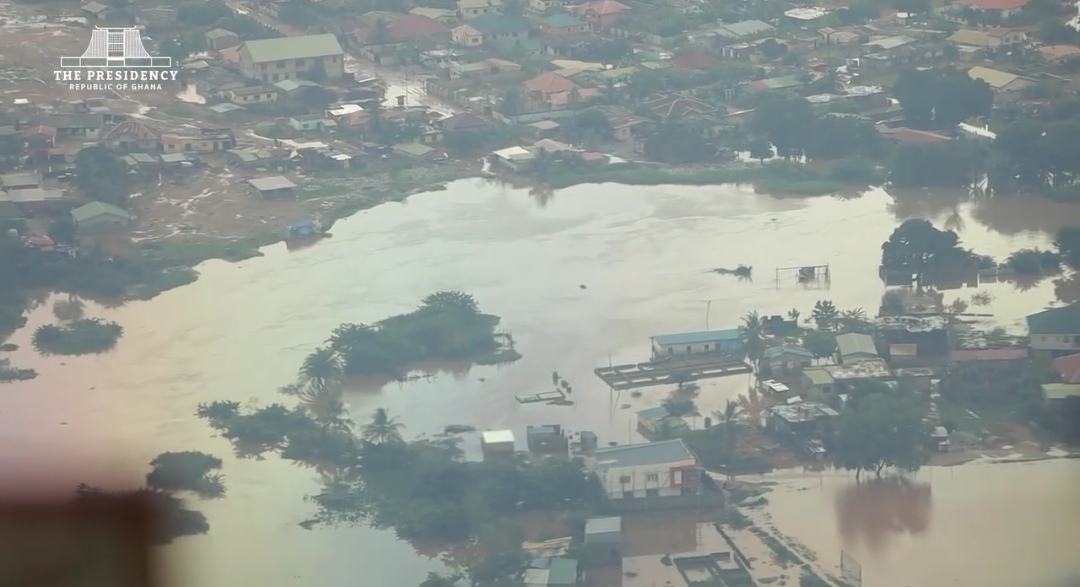
 Where water settled, families watched familiar neighbourhoods disappear. Photo: The Presidency, Republic of Ghana
The rain began quietly. Then it kept coming. Hour after hour, it beat against rooftops, spilled onto roads and flowed into homes. By dawn on June 29, 2026, many parts of Accra no longer looked familiar. Streets had turned into rivers, and cars sat half-submerged in muddy water. Families rushed to save mattresses, clothes and important documents before the floodwater reached them. After more than 18 hours of relentless rainfall, at least a dozen people had died. For many people in Accra, the floods felt painfully familiar. Every rainy season brings stories of flooded homes, stranded commuters and lives turned upside down. But this flood left scientists asking a different question
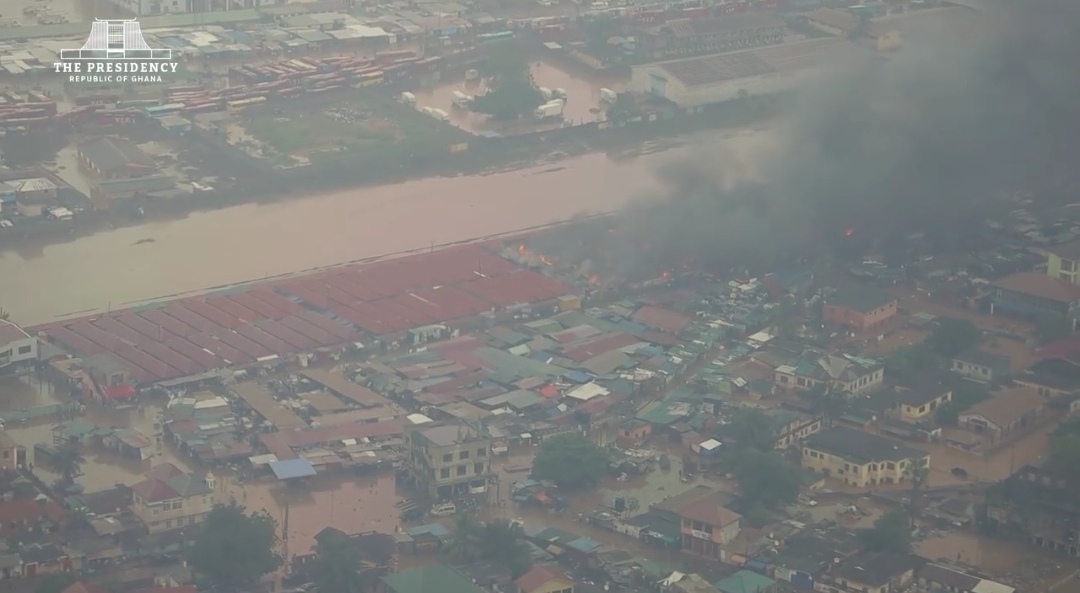 Floodwaters and flames turned a busy trading hub into chaos. Photo: The Presidency, Republic of Ghana
Why Did It Flood?
To find answers, a team of climate scientists from several international research institutions studied the heavy rainfall that swept across parts of West Africa in June 2026. Their research, Climate Change and Urban Pressure Intensify Flood Risk on the Gulf of Guinea Coast, covered Ghana, Côte d’Ivoire, Togo, Benin and Nigeria.
The weather records showed that June 2026 was no ordinary month. At the Accra International Airport weather station, the rain that fell in a single day was the fourth highest ever recorded between 1981 and 2026. Even more striking, June 2026 became the wettest June recorded during that period.
Was Climate Change Involved?
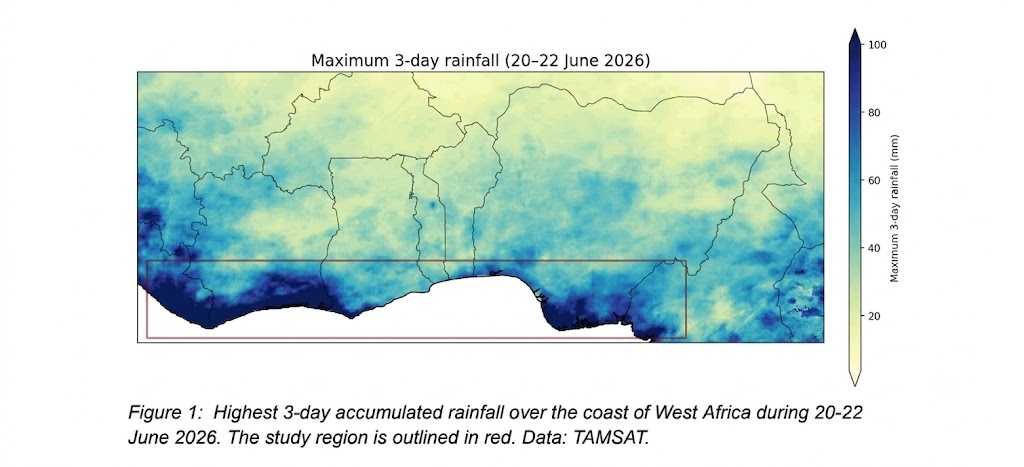
Satellite observations reveal exceptional rainfall across the Gulf of Guinea. Source: TAMSAT
The scientists looked beyond the rainfall itself. They wanted to know whether today’s warmer climate made this kind of event more likely. Their analysis suggests that it did.
Using decades of weather records, they found that heavy rainfall like this is now about five times more likely than it would have been before the world warmed by about 1.4 degrees Celsius. They also found that these heavy downpours have become stronger over time. Computer climate models also showed climate change played a role, although they estimated a smaller increase than the weather records did. Dr. Joyce Kimutai, one of the researchers from Imperial College London, said reaching that conclusion was important because tropical storms are difficult for climate models to simulate.
“Climate models typically struggle to capture the full scale of tropical precipitation trends when we look at extreme events like this one. As such, the fact that we found such a role for climate change is significant. Combined with the very wetter trend in the observational-based data, it’s clear that human-caused warming made this event worse, and wetter, with devastating impacts.”
Why Was It So Deadly?
But the scientists say the rain tells only half the story. What happens after the rain falls is just as important as the amount of rain itself. The way cities are built can determine whether heavy rainfall becomes a disaster. Imagine pouring a bucket of water onto an empty field. Much of the water sinks into the ground. Now pour that same bucket onto concrete. The water has nowhere to go, so it quickly spreads across the surface.
The researchers say many cities along the Gulf of Guinea coast face a similar challenge. As cities grow, more people are living in places that flood easily. Roads, buildings and other developments leave less space for water to drain away, making flooding far more destructive when heavy rain falls.
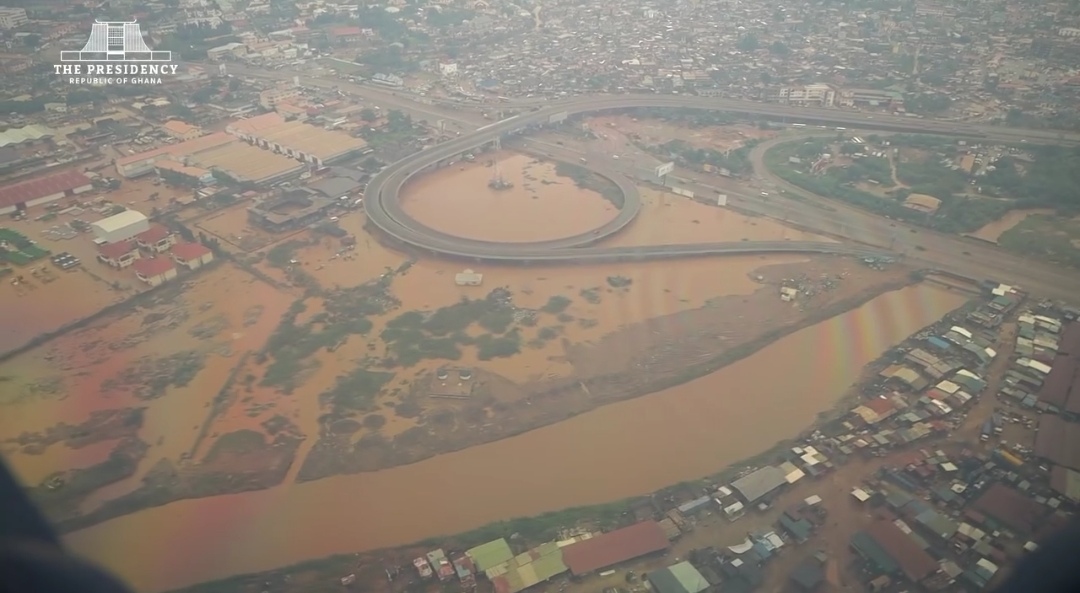 Overflowing rivers exposed Accra’s growing struggle with urban flooding. Photo: The Presidency, Republic of Ghana
How Did Cities Make It Worse?
Dr. Kiswendsida Guigma of the Red Cross Red Crescent Climate Centre says this is becoming a growing challenge across West Africa. According to him, rapid urban growth is placing increasing pressure on infrastructure that was not designed to cope with such intense rainfall.
“West Africa’s coastal cities are being squeezed between repeated flooding and rapid urban growth, pushing infrastructure beyond its limits and making it harder for communities to recover.”
He says reducing future flood impacts will require better drainage systems, safer housing, stronger early warning systems and urban planning that takes flood risks into account. Together, these measures can help communities prepare for and respond to extreme rainfall more effectively.
What Happens Next?
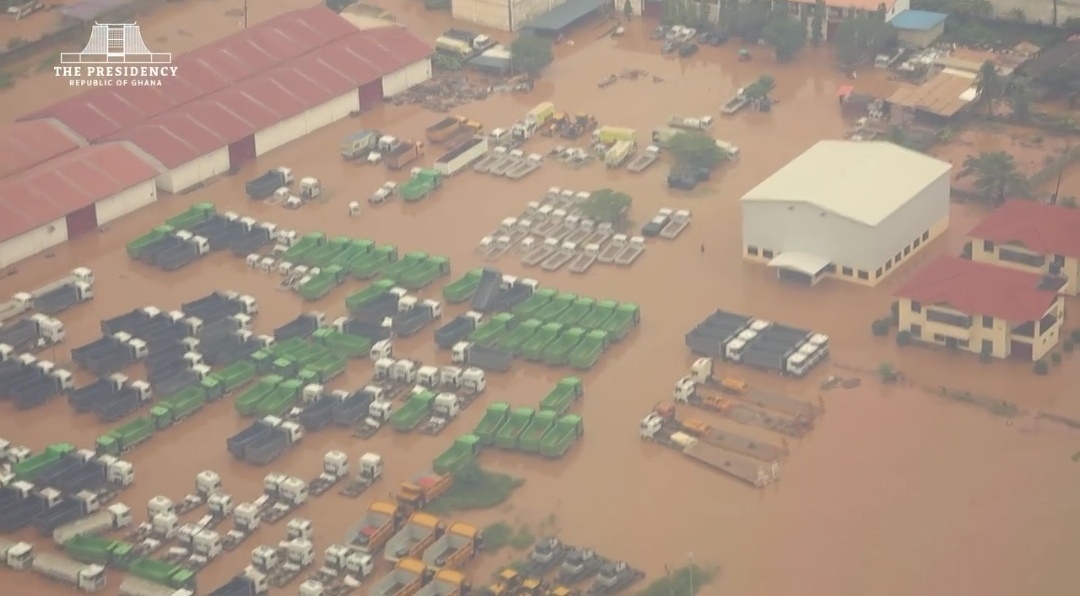 Floodwaters brought business operations and transport networks to a standstill. Photo: The Presidency, Republic of Ghana
The researchers say this is why flood disasters cannot be explained by rainfall alone. Heavy rain may trigger the disaster, but where people live, how cities are built and how prepared communities are can determine how severe the impacts become.
Their findings point to one conclusion. Climate change is increasing the risk of extreme rainfall across the Gulf of Guinea, while rapid urban growth and weaknesses in infrastructure are exposing more people to flooding. Unless both challenges are addressed, the researchers say flood risk will continue to rise across the region.