


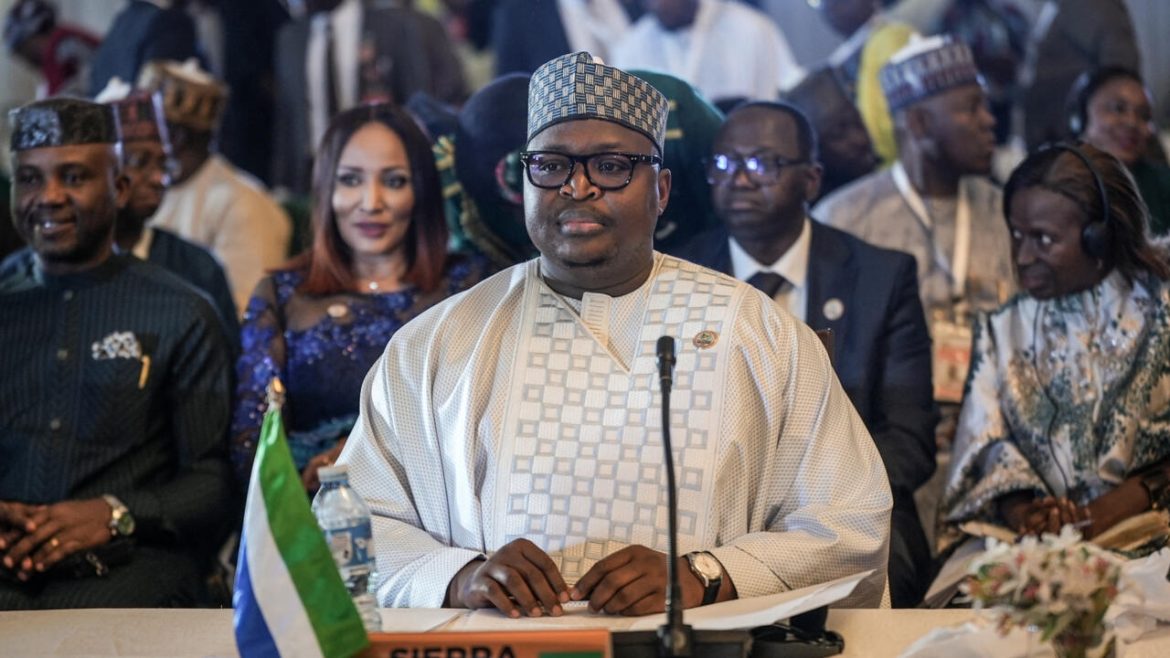
Sierra Leone on Wednesday received its first group of deportees from the United States under an agreement tied to President Donald Trump’s expanding immigration enforcement agenda, marking the latest extension of Washington’s deportation partnerships with African states amid growing scrutiny over the financial, diplomatic and human rights implications of the policy.
A flight carrying nine migrants landed at Freetown International Airport (FIA) outside the Sierra Leonean capital, according to government officials and witnesses at the scene. Sierra Leone’s Foreign Minister Timothy Musa Kabba confirmed the arrival after initially indicating that 25 deportees were expected. The group included nationals from Nigeria, Ghana, Guinea and Senegal, reflecting a regional arrangement under which Sierra Leone has agreed to temporarily receive deportees from member states of the Economic Community of West African States (ECOWAS).
The deportees, seven men and two women, arrived under police escort and were transferred to temporary accommodation as authorities prepared for their eventual repatriation to their countries of origin. According to Sierra Leone’s Health Ministry (MOH), many showed signs of psychological distress after prolonged detention in the United States. Health and Sanitation official Doris Bah said several had spent months in detention facilities and described the group as traumatized. Some reportedly expressed a desire to return home immediately.
The agreement forms part of a broader US effort to accelerate deportations through bilateral arrangements with third countries willing to host migrants removed from American territory. According to Sierra Leonean authorities, Freetown has committed to receiving up to 300 deportees annually, limited to ECOWAS nationals. A foreign ministry document cited by officials indicates that Washington will provide approximately $1.5 million to support operational and humanitarian costs associated with the programme.
The arrangement places Sierra Leone among a growing number of African countries cooperating with the United States on deportation management. Countries including Rwanda, Ghana, Cameroon, Eswatini, Equatorial Guinea, South Sudan and the Democratic Republic of Congo have entered similar agreements in recent years, reflecting Africa’s increasing role in the externalization of migration management by Western governments.
For African governments facing fiscal pressures, high unemployment and constrained foreign exchange reserves, such agreements can provide short-term financial support and diplomatic leverage. According to migration analysts, however, the long-term implications are more complex. Hosting deportees from multiple countries requires investment in border management systems, temporary housing, legal processing, health services and reintegration frameworks at a time when many African states are already struggling to finance basic public services.
The issue also intersects with wider debates around migration governance, labour mobility and international responsibility-sharing. West Africa remains one of the world’s most mobile regions, with ECOWAS protocols allowing visa-free movement across member states. Yet irregular migration routes to Europe and North America have expanded as economic instability, unemployment, insecurity and climate-related pressures intensify across parts of the continent. According to the International Organization for Migration (IOM), migration within and from Africa is increasingly linked not only to conflict, but also to deteriorating economic opportunities and environmental stress.
Sierra Leone itself continues to face significant socio-economic challenges more than two decades after the end of its civil war. The country has struggled with high youth unemployment, inflationary pressures, infrastructure deficits and repeated public health shocks, including the Ebola epidemic and the economic fallout from the COVID-19 pandemic. Against that backdrop, migration remains an important livelihood strategy for many households, supported by diaspora remittances that contribute substantially to domestic consumption and foreign currency inflows.
Human rights organizations have raised concerns over the opacity of deportation agreements involving third-country hosting arrangements. Human Rights Watch (HRW) warned in September that such deals risk undermining international refugee and human rights protections if deportees are transferred without adequate legal safeguards, transparency or long-term reintegration support. The organisation argued that external migration control arrangements increasingly shift humanitarian responsibilities onto lower-income states with limited institutional capacity.
The United States has defended the policy as part of its broader border enforcement strategy. A State Department spokesperson described migrant removals as a “top priority” for Washington, although US officials have not publicly detailed the criteria used to select African partner countries or the full scope of financial and diplomatic incentives offered.
For Sierra Leone and other participating African states, the agreements may test the balance between diplomatic cooperation and domestic political sensitivity. Migration remains a deeply emotional and economically significant issue across the region, particularly among younger populations facing limited formal employment opportunities. Analysts note that public perception of deportation partnerships could increasingly shape debates around sovereignty, labour mobility and Africa’s role in global migration governance.

The arrival of the deportees in Freetown underscores how international migration policy is becoming more deeply intertwined with African economic management, public administration and regional diplomacy. While the immediate focus remains on border enforcement and repatriation logistics, the longer-term implications are likely to extend into labour markets, public spending priorities and the capacity of African states to manage increasingly complex migration systems in a rapidly shifting geopolitical environment.


